Quick answer
Use the U-Bahn for many short trips inside Berlin. Use the S-Bahn for longer cross-city movement, Ringbahn travel, airport or outer-district routes, and many exhibition journeys. For most visitors, the right answer is not one or the other: it is knowing when to use each.
Berlin's metro-style urban rail network. It is especially useful for dense inner-city trips, sightseeing areas, evening routes, and moving between nearby neighborhoods.
Berlin's city and suburban rail network. It is often faster for longer distances, above-ground rail corridors, the Ringbahn, and trips toward the airport or surrounding areas.
Berlin U-Bahn and S-Bahn map
On the Berlin rail map, U-Bahn routes begin with U and S-Bahn routes begin with S. The same map also shows the fare zones that matter for ticket choice: AB for most central city travel, and ABC for places such as BER Airport and Potsdam.

Map preview based on the official BVG network map. For the latest full map and PDFs, use the official BVG network maps page before travel.
U-Bahn vs S-Bahn comparison
| Feature | U-Bahn | S-Bahn |
|---|---|---|
| Best for | Short inner-city trips, nightlife areas, shopping districts, and dense neighborhood travel. | Longer cross-city journeys, airport links, suburban trips, and fast east-west or ring routes. |
| Operator | BVG, Berlin public transport operator. | S-Bahn Berlin, part of Deutsche Bahn, within the VBB fare system. |
| Station sign | Blue U symbol. | Green S symbol. |
| Network feel | Metro-style city network with many underground sections and close station spacing. | Urban-suburban rail with many above-ground sections and wider station spacing. |
| Tickets | Uses the same Berlin fare zones and tickets as S-Bahn, buses, trams, and ferries. | Uses the same Berlin fare zones and tickets as U-Bahn, buses, trams, and ferries. |
| When visitors use it most | City-center sightseeing, Kurfurstendamm, Kreuzberg, Mitte, Charlottenburg, and evening routes. | Messe Berlin access, Ringbahn travel, airport routes, regional edges, and fast cross-city movement. |
S-Bahn Berlin: lines, timetables, and tickets
The S-Bahn is Berlin's urban and suburban rail system. It is operated by S-Bahn Berlin and is integrated into the same VBB fare system as the U-Bahn, buses, trams, and ferries. Stations use the green S symbol, and many routes run above ground.

Overview of the S-Bahn network
- 15 main lines, including S1 to S9 and additional branch services.
- Around 170 stations across Berlin and the surrounding Brandenburg region.
- Approximately 330 km of track, with many visible above-ground sections.
- Integrated into the VBB fare system, so the same valid ticket can cover S-Bahn, U-Bahn, buses, trams, and ferries.
East-west corridor
The east-west S-Bahn corridor is one of the busiest and most useful rail backbones in Berlin. It links the western rail hubs with central Berlin and the eastern interchange at Ostkreuz.
- Important lines: S5, S7, S75
- Useful stops: Berlin Hauptbahnhof, Friedrichstrasse, Museum Island area, Hackescher Markt, Alexanderplatz, Ostkreuz
North-south commuter routes
Several S-Bahn lines connect residential suburbs with central Berlin. These can be especially useful if your hotel is outside the inner ring or if you are visiting friends, offices, or venues beyond the city center.
- S1: Oranienburg to Wannsee.
- S2: Bernau to Blankenfelde.
- S25: Teltow Stadt to Hennigsdorf.
- S26: a branch-style north-south service that helps connect outer districts with the city.
Ringbahn: S41 and S42
The Ringbahn circles central Berlin and is one of the easiest ways to move between districts without crossing the busiest central stations.
- S41 runs clockwise around the Ringbahn.
- S42 runs counterclockwise around the Ringbahn.
- The loop is about 37 km long.
- There are 27 stations on the ring.
- A full loop takes roughly one hour.
- Major ring stations include Westkreuz, Gesundbrunnen, Ostkreuz, and Sudkreuz.
S-Bahn timetables and frequency
- Weekday service generally starts early in the morning and runs until after midnight.
- On weekends, many central S-Bahn routes operate through the night.
- Peak-hour routes often run every 5 to 10 minutes.
- Off-peak services are often every 10 to 20 minutes, depending on the route.
- Night service on weekends is usually less frequent, so check live departures before relying on a late train.
U-Bahn Berlin: tickets, lines, routes, and timetables
The Berlin U-Bahn is the city's subway and metro-style rail network. It is operated by BVG and integrated into the VBB fare system, which allows seamless travel across U-Bahn, S-Bahn, buses, trams, and ferries when the ticket covers the correct fare zones.
9 lines across Berlin.
Around 155 km of track.
Approximately 175 stations.
Most of the network is underground, though several sections run above ground or on elevated structures.
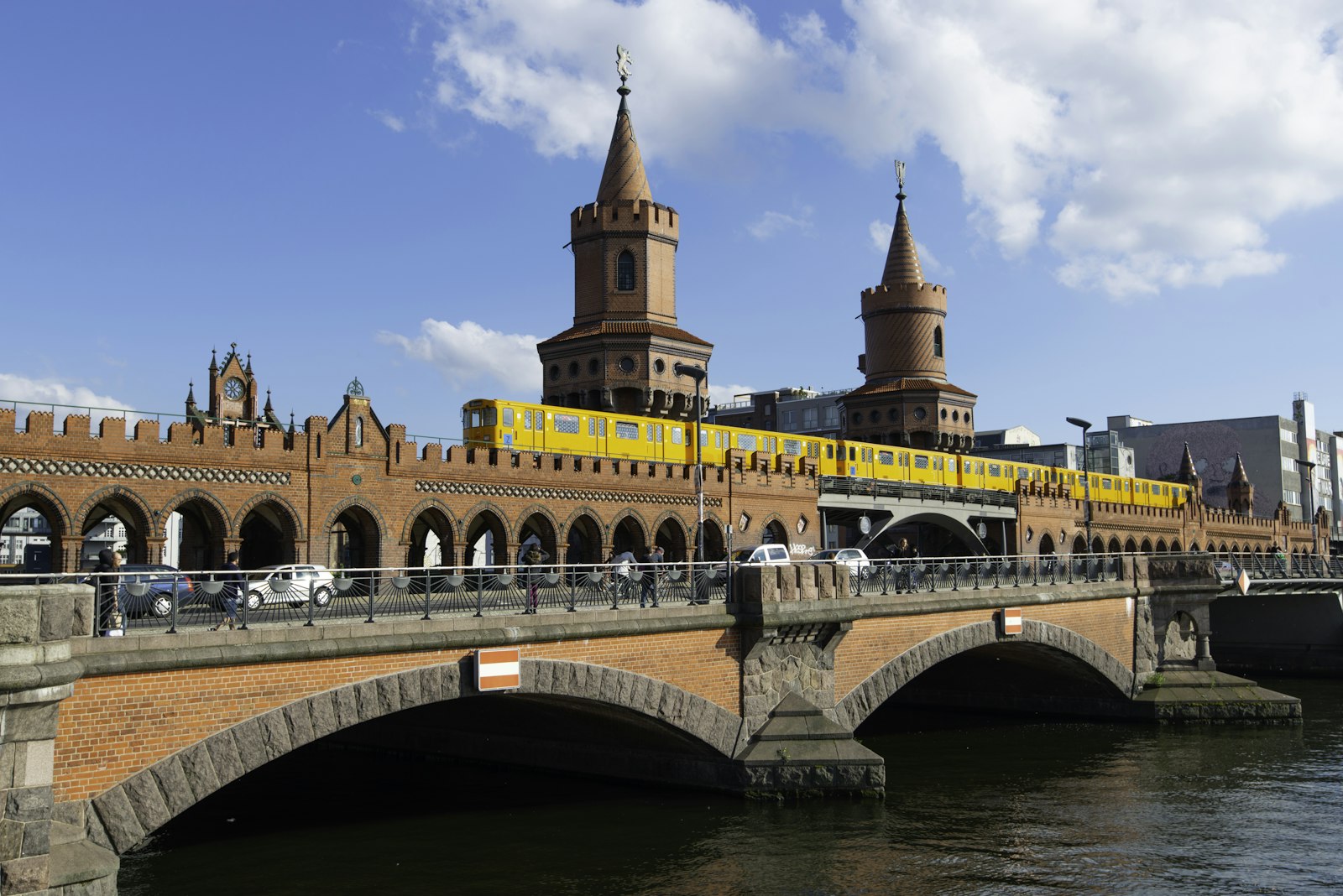
Trains are easy to recognize because of their yellow BVG design.
U-Bahn tickets, tariff zones, and validity
With a valid ticket, passengers can use all main public transport in Berlin: U-Bahn, S-Bahn, buses, trams, and ferries. Ticket prices depend on fare zones and validity duration. AB covers central Berlin up to the city limits, while ABC includes surrounding areas such as BER Airport and Potsdam.
| Ticket type | Typical use | Berlin AB | Berlin ABC |
|---|---|---|---|
| Single ticket | One-way journey valid for a limited period after validation. | EUR4.00 regular / EUR2.50 reduced | EUR5.00 regular / EUR3.50 reduced |
| Short trip ticket | Up to 3 stops on U-Bahn or S-Bahn, or 6 stops by bus or tram, with stricter transfer rules. | EUR2.80 regular / EUR2.10 reduced | Check BVG/VBB |
| 24-hour ticket | Useful when making several journeys in one day. | EUR11.20 regular / EUR7.40 reduced | EUR12.90 regular / EUR8.00 reduced |
| 24-hour small group ticket | For groups of up to 5 people traveling together. | EUR35.30 | EUR37.70 |
Fares can change. Use official BVG or VBB pages to confirm live prices before travel.
Buying and validating tickets
Where to buy tickets
- Multilingual ticket machines at U-Bahn and S-Bahn stations.
- Service counters in major stations.
- The BVG app and other official journey-planning apps.
- Some bus and tram payment options, depending on the vehicle and payment method.
Validation notes
- Paper tickets usually need to be stamped before the first journey.
- Tickets bought in an app usually need to be valid or activated before boarding.
- Keep the ticket until the journey is finished because inspections are common.
- If your route includes BER Airport, Potsdam, or another zone C destination, choose ABC rather than AB.
Berlin U-Bahn lines
East-west and cross-city lines
- U1: Warschauer Strasse to Uhlandstrasse, crossing Kreuzberg, Charlottenburg, and the Oberbaum Bridge area.
- U2: Ruhleben to Pankow, passing Zoologischer Garten, Potsdamer Platz, Alexanderplatz, and other central stops.
- U3: Krumme Lanke to Warschauer Strasse, linking southwest Berlin with central and eastern areas.
- U4: Nollendorfplatz to Innsbrucker Platz, a short local line in western Berlin.
- U5: Hoenow to Hauptbahnhof, useful for Alexanderplatz, Museum Island, Unter den Linden, and Berlin Central Station.
- U7: Rathaus Spandau to Rudow, the longest U-Bahn line and a major cross-city route.
North-south lines
- U6: Alt-Tegel to Alt-Mariendorf, including Friedrichstrasse, Stadtmitte, and Tempelhof.
- U8: Wittenau to Hermannstrasse, passing Alexanderplatz and Kottbusser Tor.
- U9: Osloer Strasse to Rathaus Steglitz, connecting western Berlin including Kurfurstendamm and Zoologischer Garten.
U-Bahn timetables
- On weekdays, many U-Bahn lines run from roughly 04:00 until around 01:00.
- During the day, trains can run as often as every 5 minutes on busy sections.
- Later in the evening, intervals are commonly closer to 10 minutes.
- On weekends, most U-Bahn lines run through the night.
- Night buses cover routes when U-Bahn service is not running.
Shared tickets and fare zones
The most important practical point is that U-Bahn and S-Bahn tickets are not separate. Berlin uses an integrated fare system. A valid ticket for the correct zone can cover U-Bahn, S-Bahn, buses, trams, and ferries.
- One valid Berlin ticket normally works across U-Bahn, S-Bahn, buses, trams, and ferries within the selected fare zones.
- AB covers central Berlin and most city trips. ABC includes BER Airport, Potsdam, and wider surrounding areas.
- Paper tickets usually need validation before travel. App tickets are normally activated in the app.
- For quick short hops, Berlin has short-trip tickets, but transfer rules are stricter than a normal single ticket.
- Fares change over time, so check BVG or VBB before publishing prices in travel plans or event instructions.
Which one should you use in Berlin?
- For Messe Berlin, check both S-Bahn and U-Bahn options. Some hotels are faster by Ringbahn or S-Bahn, while others work better with U2 or a short taxi.
- For Charlottenburg and Kurfurstendamm, the U-Bahn is often convenient for short local movement, while the S-Bahn can be better for longer cross-city trips.
- For first-time visitors, use landmarks on the map: Hauptbahnhof, Alexanderplatz, Zoologischer Garten, Ostkreuz, Westkreuz, and Sudkreuz are major orientation points.
- For late nights, many U-Bahn and S-Bahn lines run through the night on weekends, while night buses cover gaps when trains stop on weekday nights.
For Messe Berlin and business travelers
If you are coming to Berlin for an exhibition, the best train choice depends on where your hotel is. Hotels around Charlottenburg, Kaiserdamm, Zoologischer Garten, and the Ringbahn can all work, but the route can change sharply from one hotel to another.
FAQ
Can I use the same ticket on the U-Bahn and S-Bahn in Berlin?
Yes. Berlin uses an integrated fare system, so a valid ticket for the correct zones can be used on U-Bahn, S-Bahn, buses, trams, and ferries.
Which is better for tourists, U-Bahn or S-Bahn?
Most visitors use both. The U-Bahn is often easier for short inner-city trips, while the S-Bahn is better for longer cross-city routes, the Ringbahn, some airport journeys, and travel to outer districts.
What is the easiest way to read the Berlin train map?
Look first for your fare zone, then the station name, then the line number. U-Bahn lines begin with U, S-Bahn lines begin with S, and interchange stations show several lines together.
Do I need an ABC ticket for Berlin Airport?
For BER Airport, travelers generally need a ticket covering fare zone C, such as an ABC ticket. Always check the latest BVG or VBB fare information before travel.